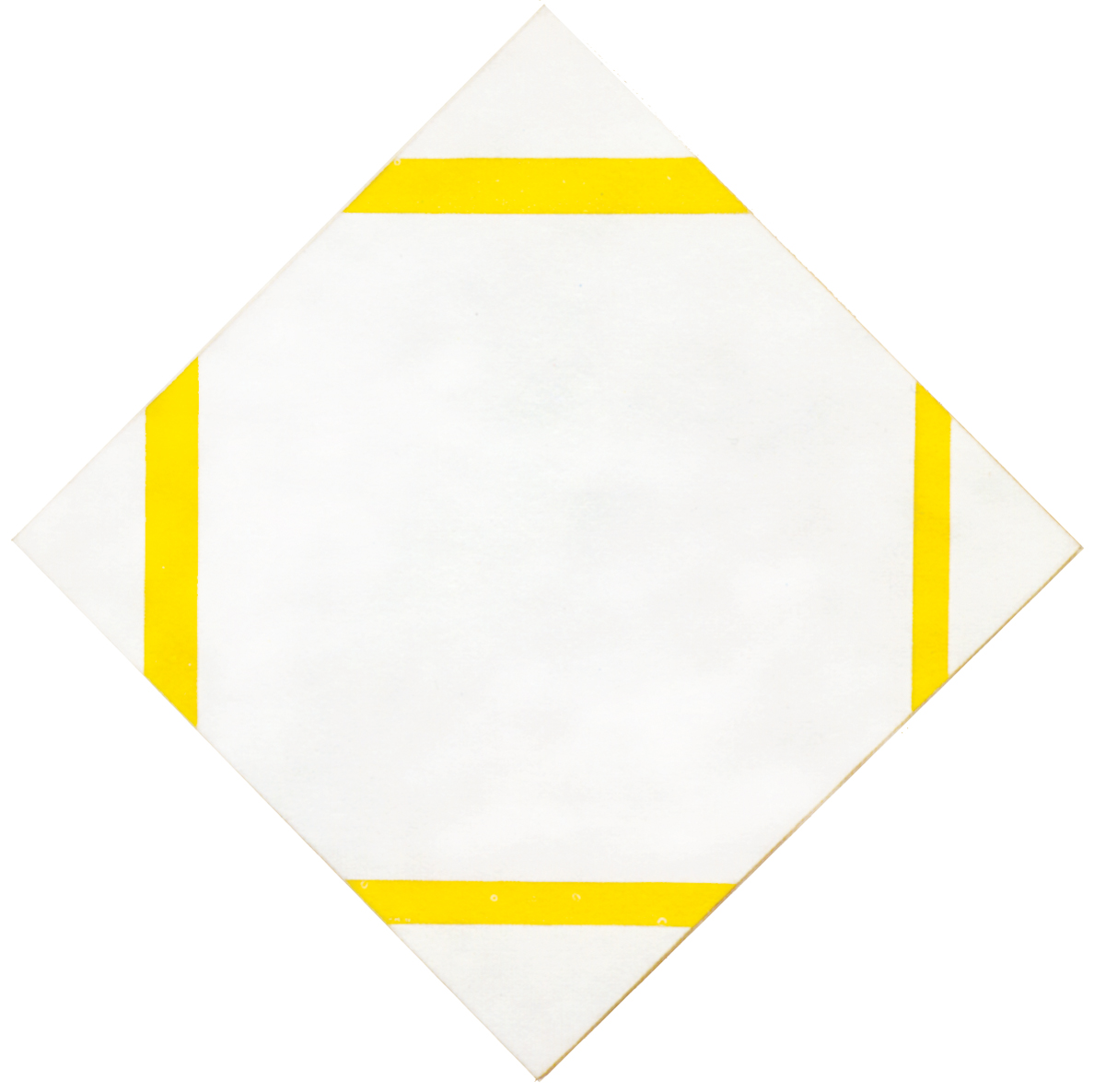
How does Mondrian come to a space based on a relationship between horizontal and vertical straight lines?
The artist begins to paint in accordance with the tested canons of the naturalistic painting, otherwise called figurative:
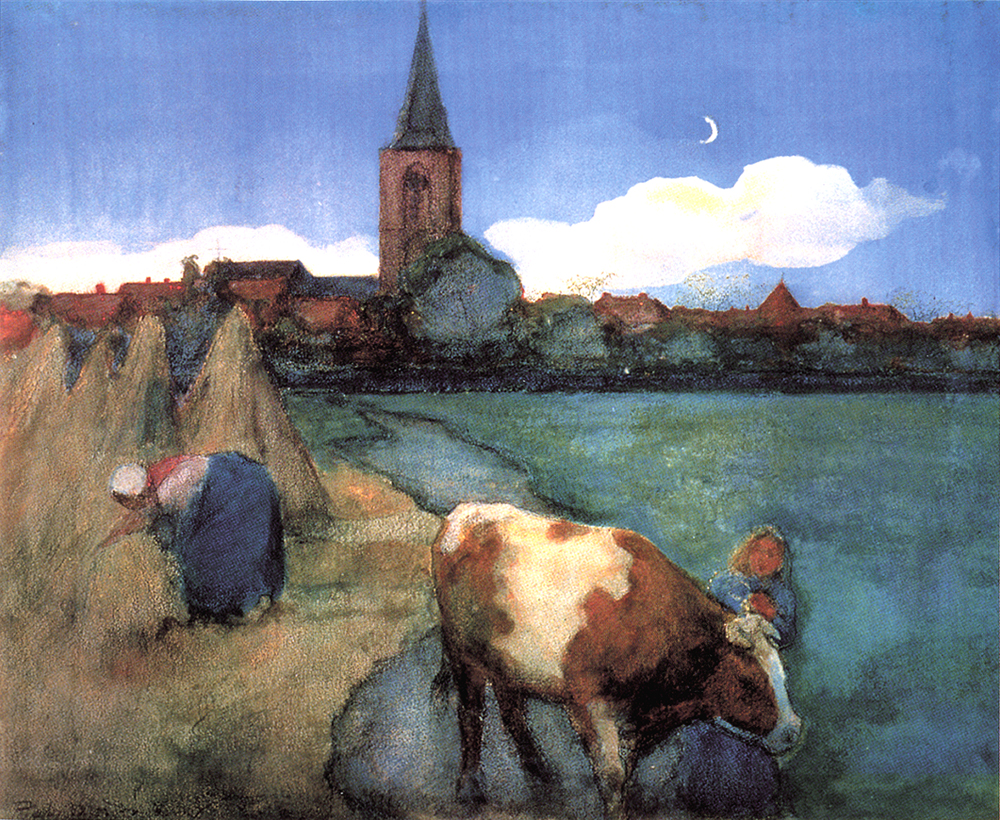
Farm Scene with St. Jakob’s Church, 1899
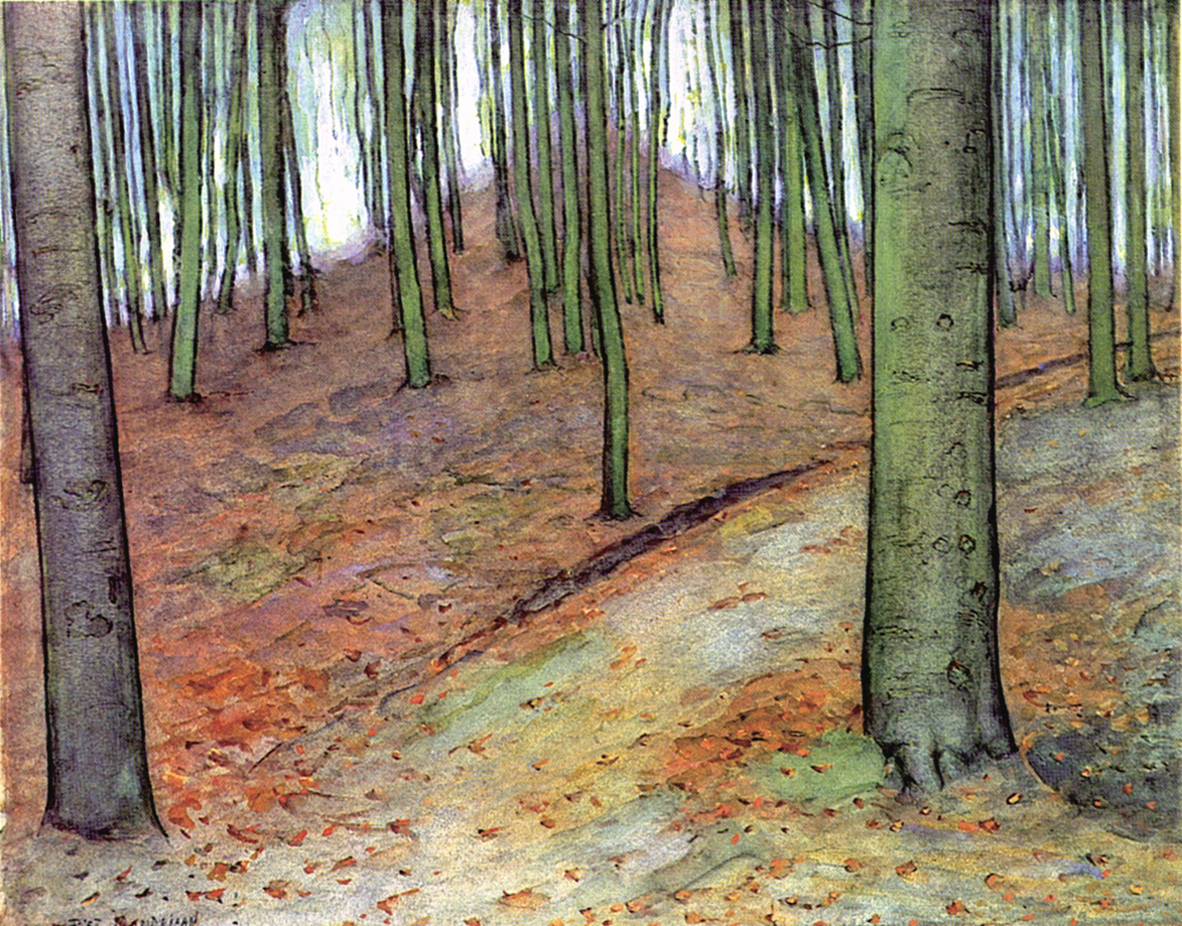
Wood of Beech Trees, 1899
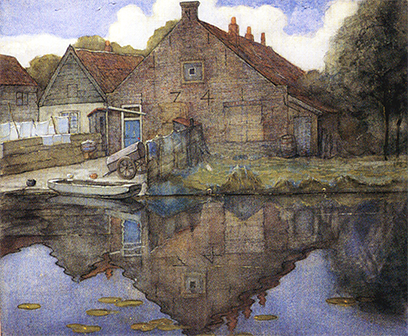
House on the Gein, 1901
Around 1907, the earlier landscapes of the naturalist phase are stripped of trees, houses, and any sign of human presence and seem designed to evoke the boundless extension of an unspoiled nature:
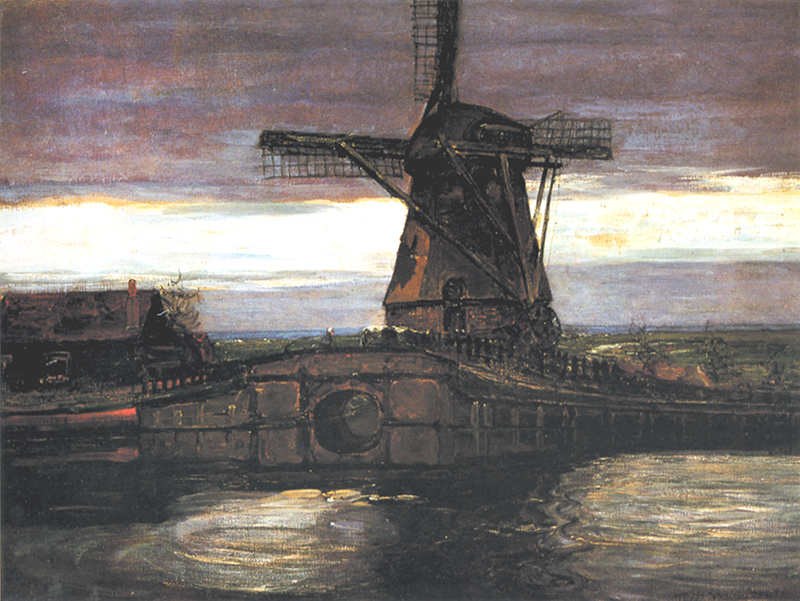
Stammer Mill with Streaked Sky, 1905-06
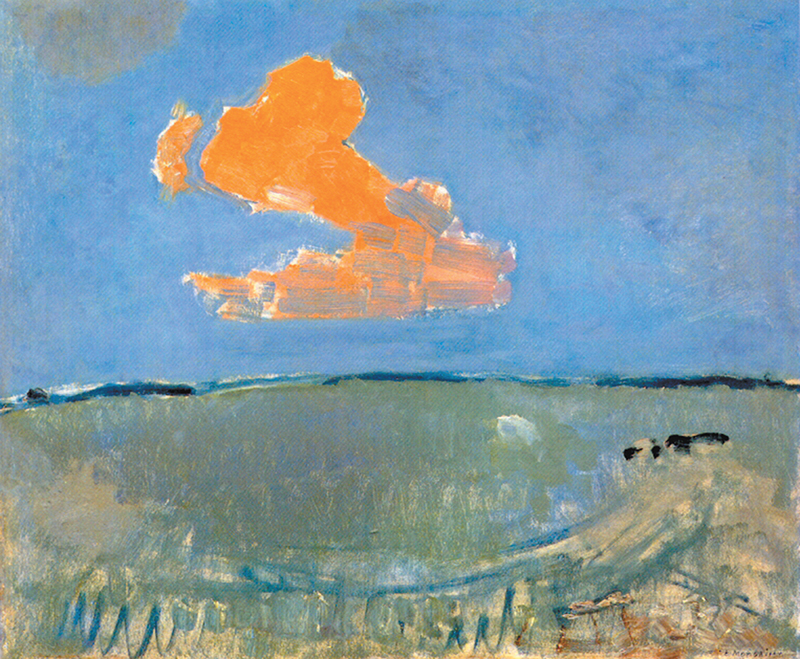
The Red Cloud, 1907-08
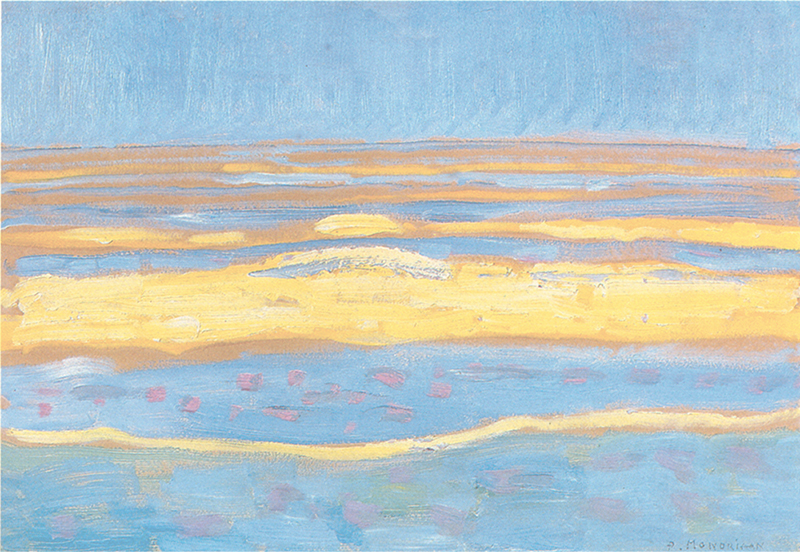
Seascape, 1909
As art historian H. L. C. Jaffé observes, “His confrontation in 1909 with the infinity of nature coincides with his joining the Netherlands Theosophical Society, where man’s union with the infinitude of the universe was a central problem.”
At the same time the painter’s attention turns to constructions such as mills or lighthouses:
Stammer Mill
1905-06
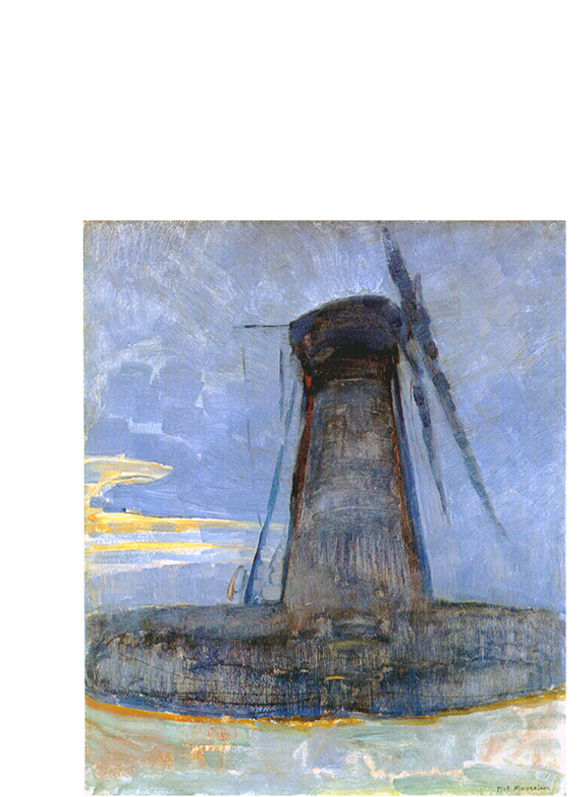
Mill at Domburg
1907-08
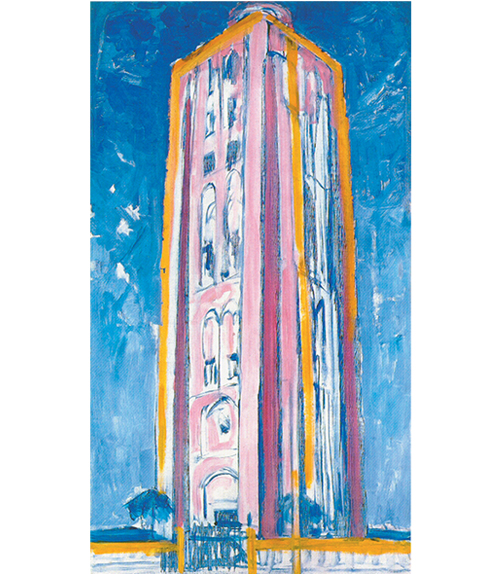
Lighthouse
1909
In the compositions that expand horizontally, the gaze is opened to the infinite dimension of nature while in the vertical architectures everything is concentrated into a finite space in which human beings think, design and build to rise from a primitive condition of nature.
Mondrian wrote that the horizontal represents the Natural while the vertical evokes the Spiritual.
The vertical elevation expresses mankind’s atavistic propensity to imagine a spiritual dimension extending toward the ethereal space of the heavens rather than remaining bound to the everyday matter spread out horizontally before our eyes.
The Natural and the Spiritual
The artist ascribed to the horizontal the value of everything that can be defined as Natural not only in the sense of the natural physical extension but also as anything that during our life, around and within us, constantly and unpredictably changes. In the vertical Mondrian saw a symbol of the Spiritual that is, of the all-human propensity to seek stability and unity. Our lives unfold through a dynamic interaction between instincts and reason, mutable and constant, multiplicity and unity, that is to say, between opposite drives. How to express opposite drives in the bi-dimensional space of painting? A way is to generate a dynamic contrast between horizontal and vertical lines.
While an horizontal compositional space prevails in the landscapes and a vertical layout in the architectures, the opposite directions symbolically merge together into the basic structure of a bare tree:
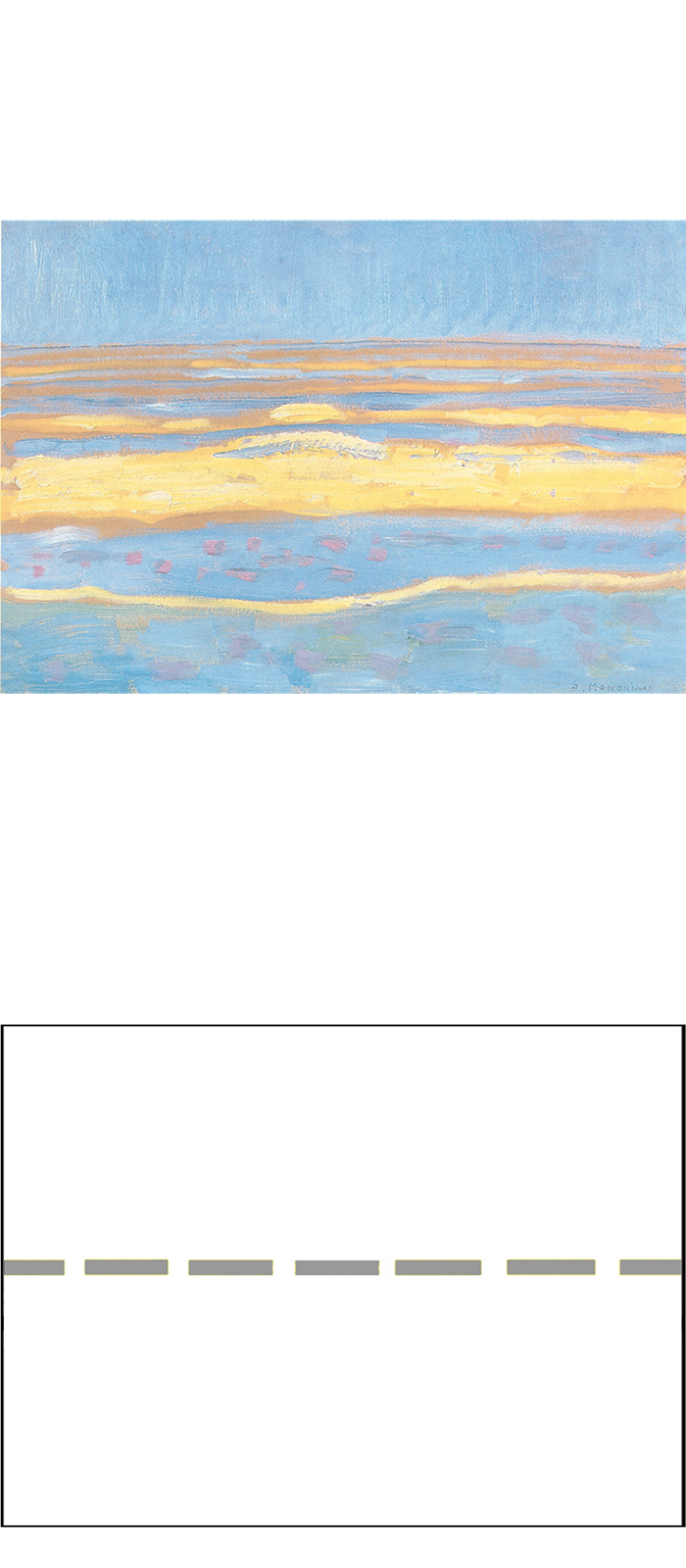
Seascape, 1909 with Diagram
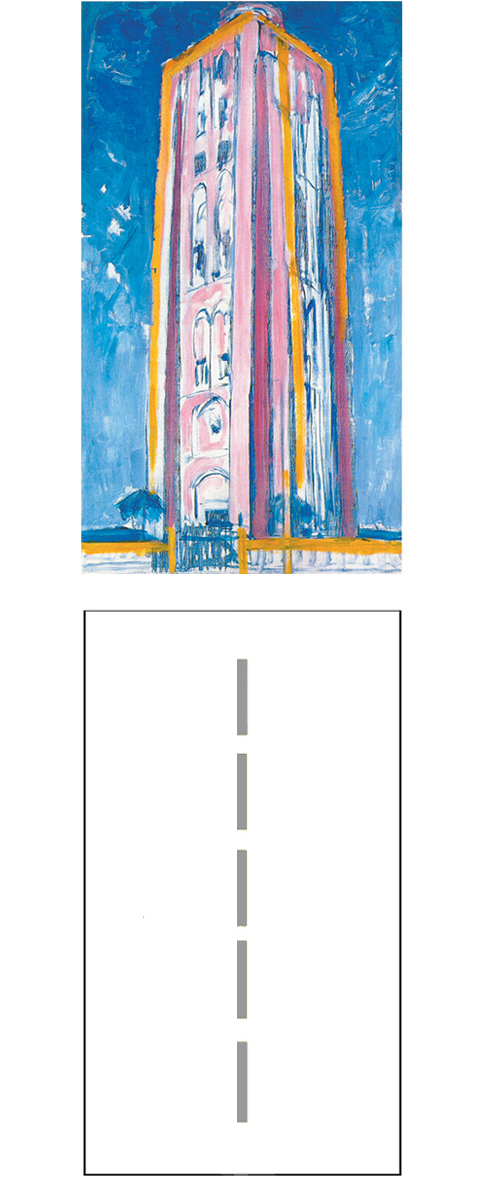
Lighthouse at Westkapelle, 1909 with Diagram
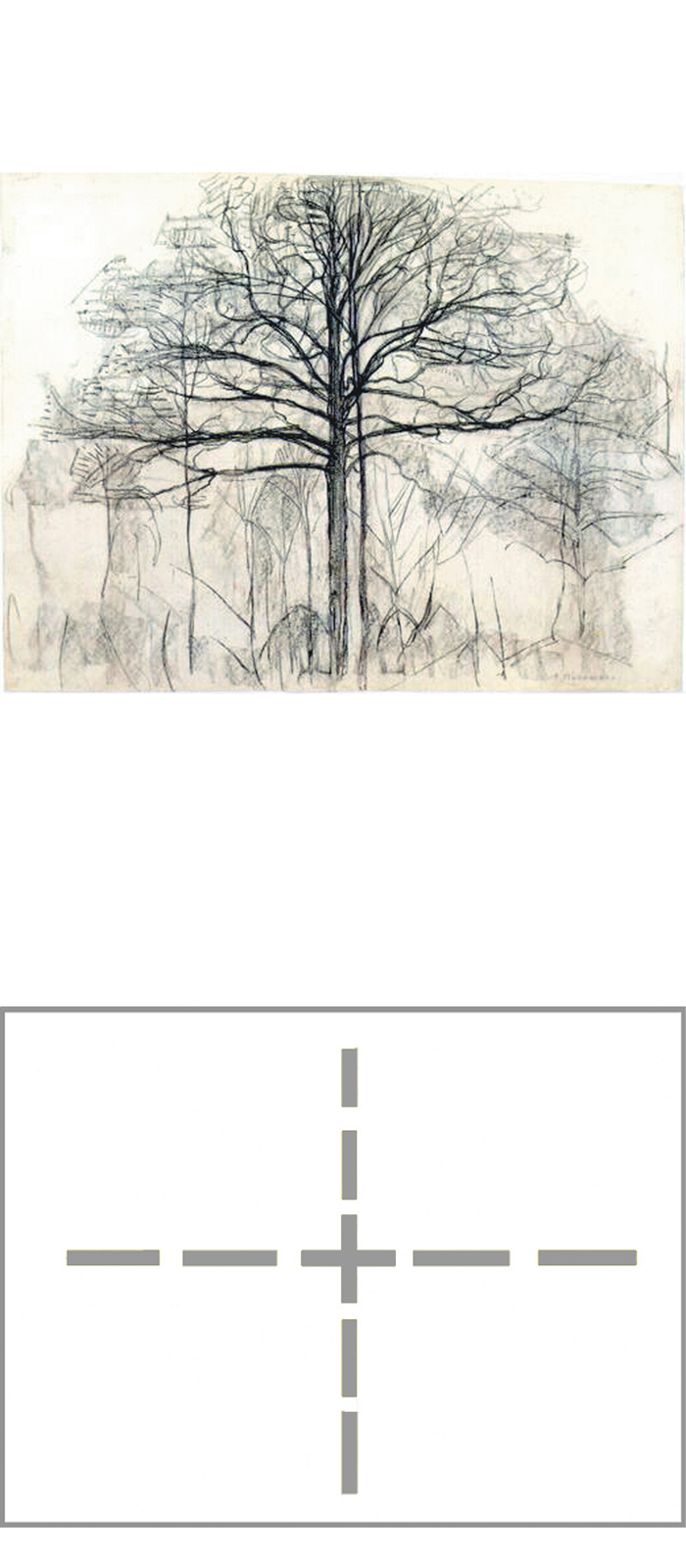
Study of Trees 1, 1912 with Diagram
In the bare tree the branches extend horizontally towards the sides while the vertical trunk holds them back from the center. Through the metaphorical image of a tree Mondrian evokes an ideal synthesis of the horizontal expansion of the all-horizontal land and seascapes and the all-vertical architectural volumes of the mills and lighthouses.
The horizontal extension of the branches evokes changing multiplicity (the Natural) while the vertical concentration into the trunk suggests stability and unity (the Spiritual)
The abstract compositions of the following years, formed by horizontal and vertical lines as well as by colored planes, are already present in the figure of a tree although still in a form veiled by appearances.
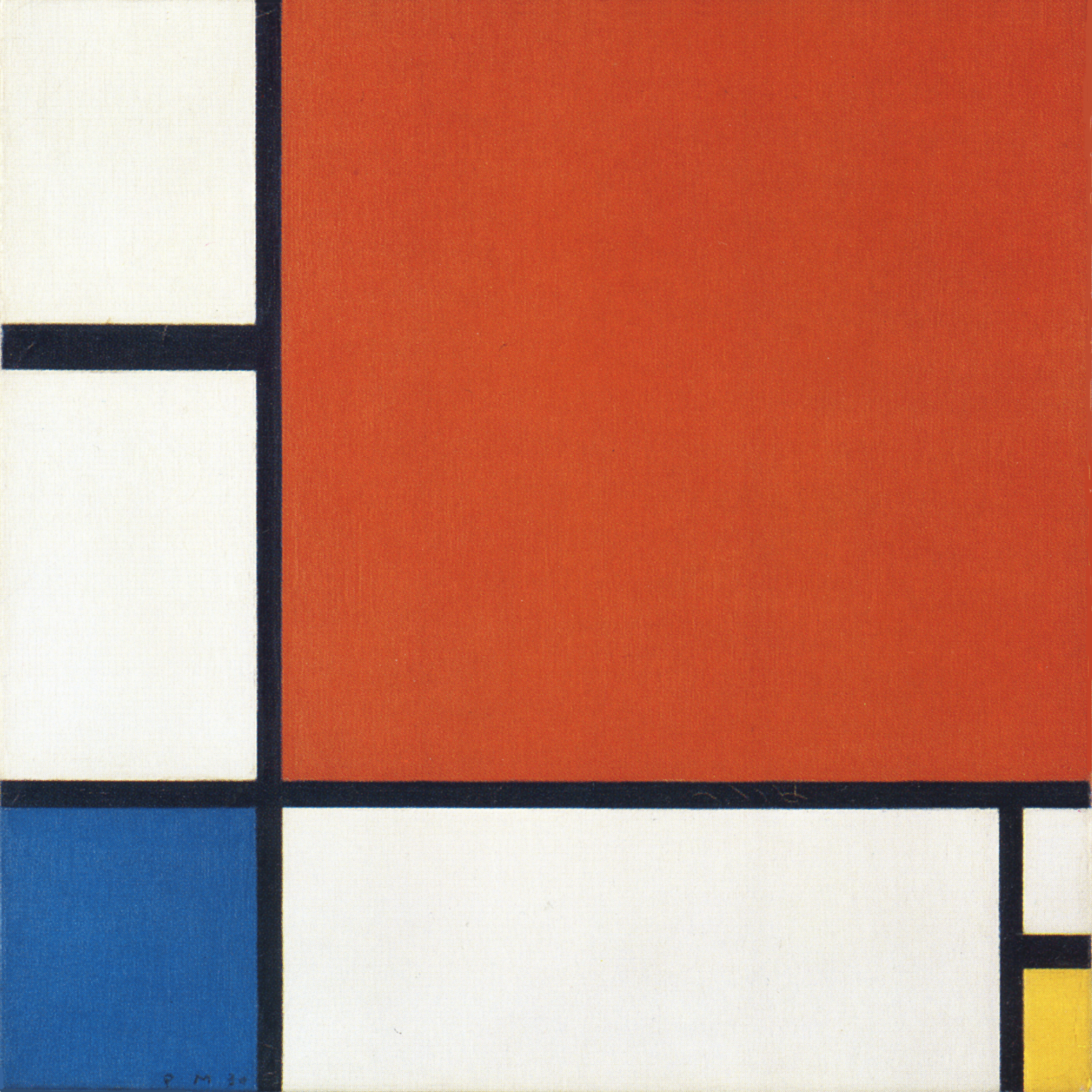
1920
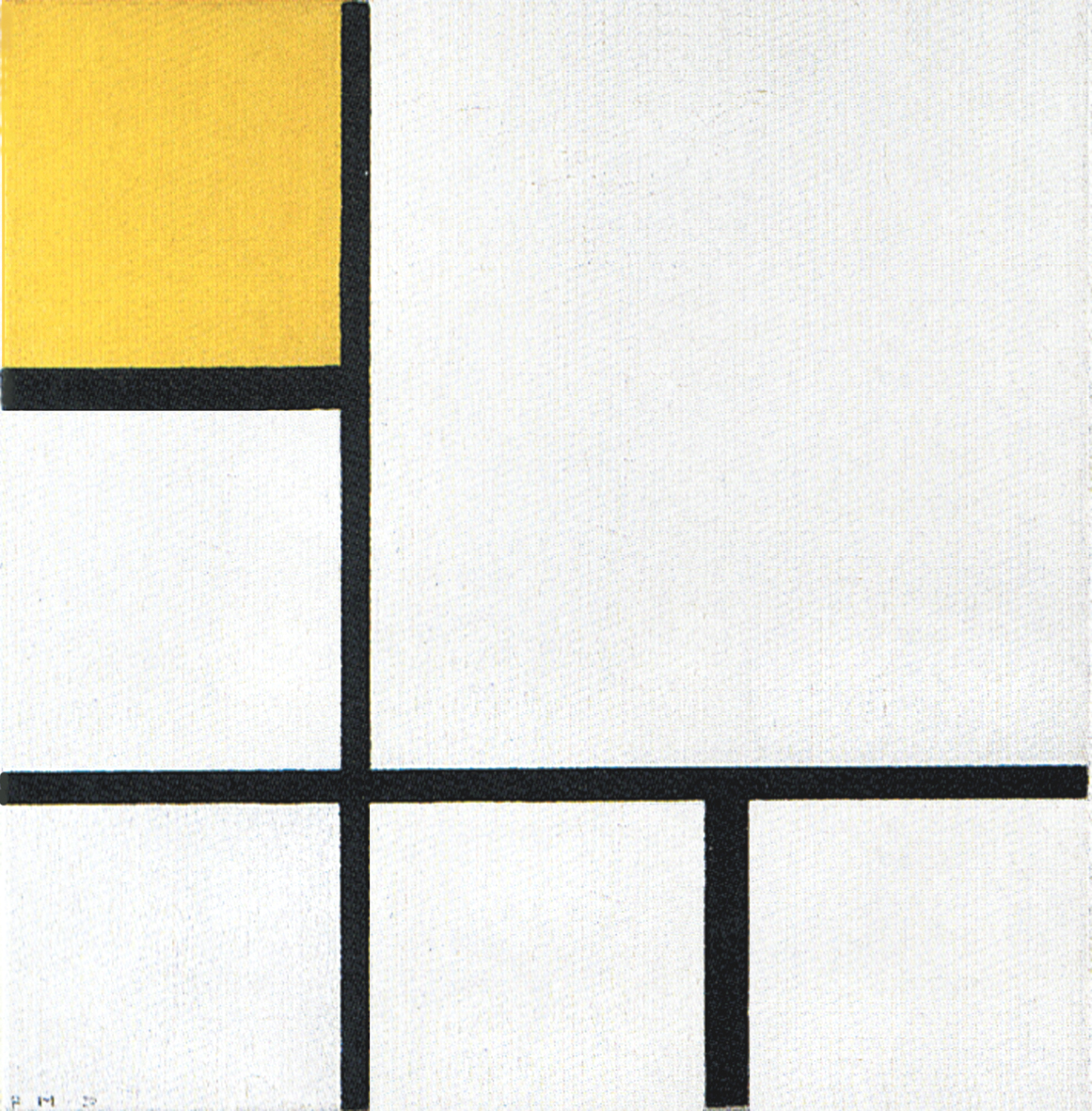
1922
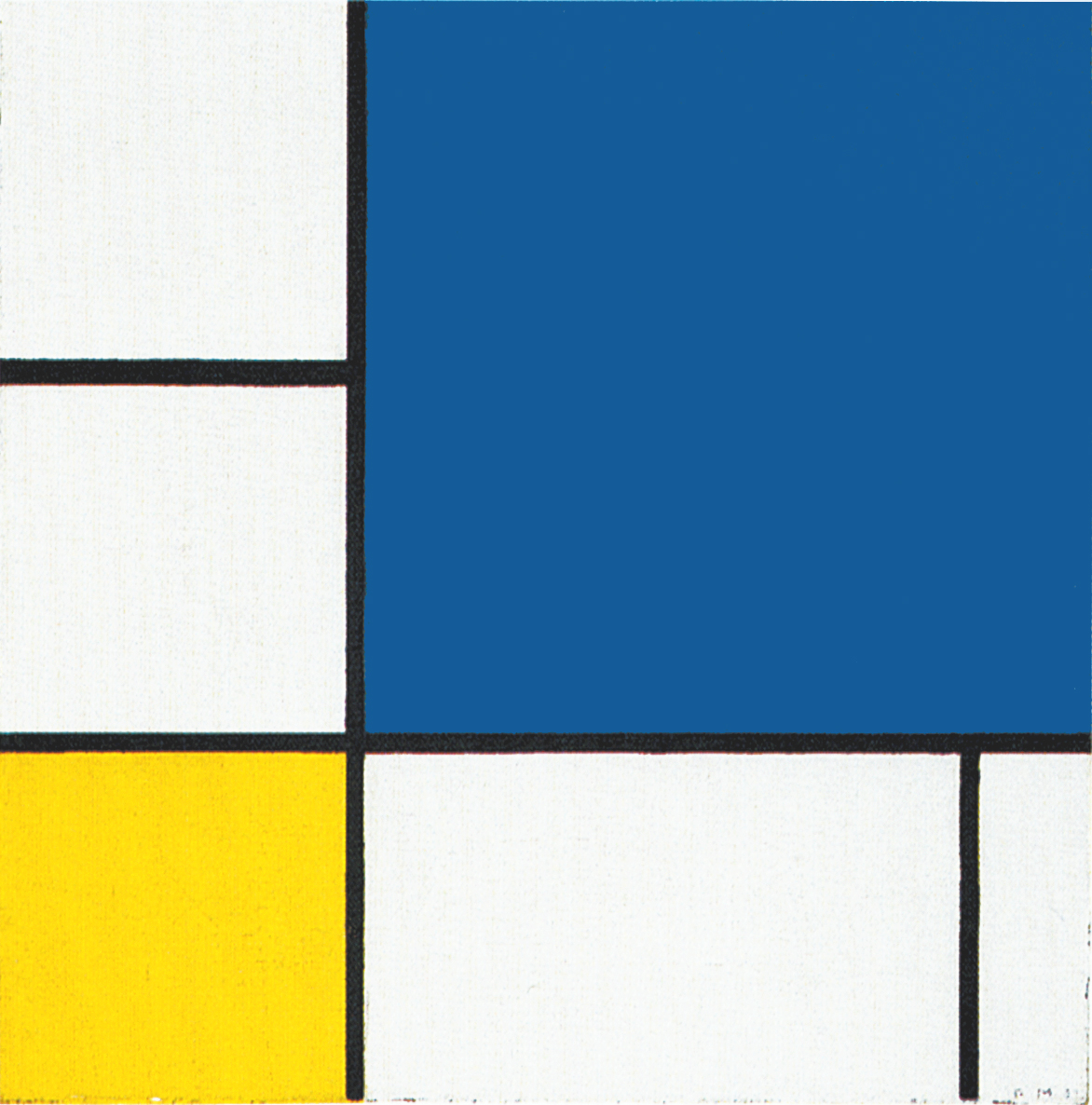
1932
In the abstract works we shall see an on-going dialogue between opposite straight lines which, on the one hand, generate rectangles of varying size, proportions and colors (Fig. 10, 11, 12), i.e., a mutable setting (symbol of the Natural) while, at the same time, give birth to one or several square proportions. (Fig. 10, 11, 12).
A square comes into being when horizontals and verticals acquire the same value, that is to say, when opposite drives, i.e., a duality transforms into unity. When this happens the multiplicity expressed by the on-going prevalence of one or the other direction, in the form of rectangles of variable size and proportions (the Natural), reveals a moment of balance and unity (the Spiritual).
Mondrian does not see the square as a closed and pre-established geometric shape but rather the given moment in which the relationship between opposites (horizontals and verticals) attains balance which is then lost when rectangles of different size and proportion – a plastic symbol of the inner contraddictions and the endless diversity of the real world – again start to challenge and attain predominance over one another. Every Neoplastic composition expresses this dialectic between the contraddictory aspects of life and the human need to stabilize them and find something of greater constancy and duration. A square form keeps space constant while differences in size, proportion and color change it.
A dynamic interaction between multiplicity and unity will be one of the fundamental guiding threads of Mondrian’s entire oeuvre.
Copyright Michele (Michael) Sciam. All Rights Reserved More