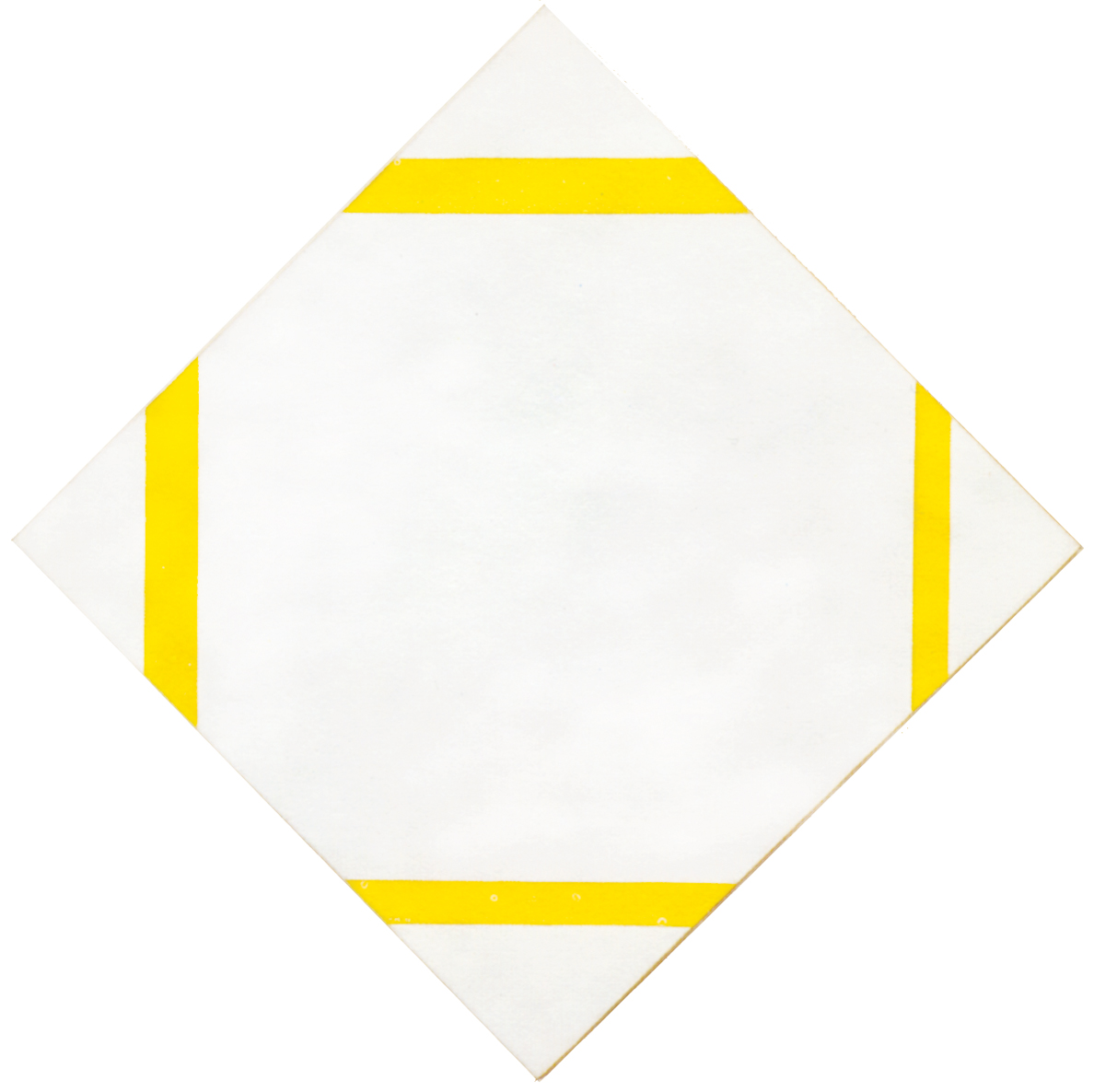
Painting means observing the world, breathing in all of its forms and colors and transforming that infinite variety into the most concentrated forms of thought. This is the real meaning of abstraction and not just sprinkling any shapes and colors in bulk on a surface.
From this perspective, every painting – even the most realistic (figurative) one – is always an abstraction of reality. I think of Magritte’s pipe. The difference between a work described as realistic (figurative) and one described as abstract lies in the degree of abstraction from what we call reality.
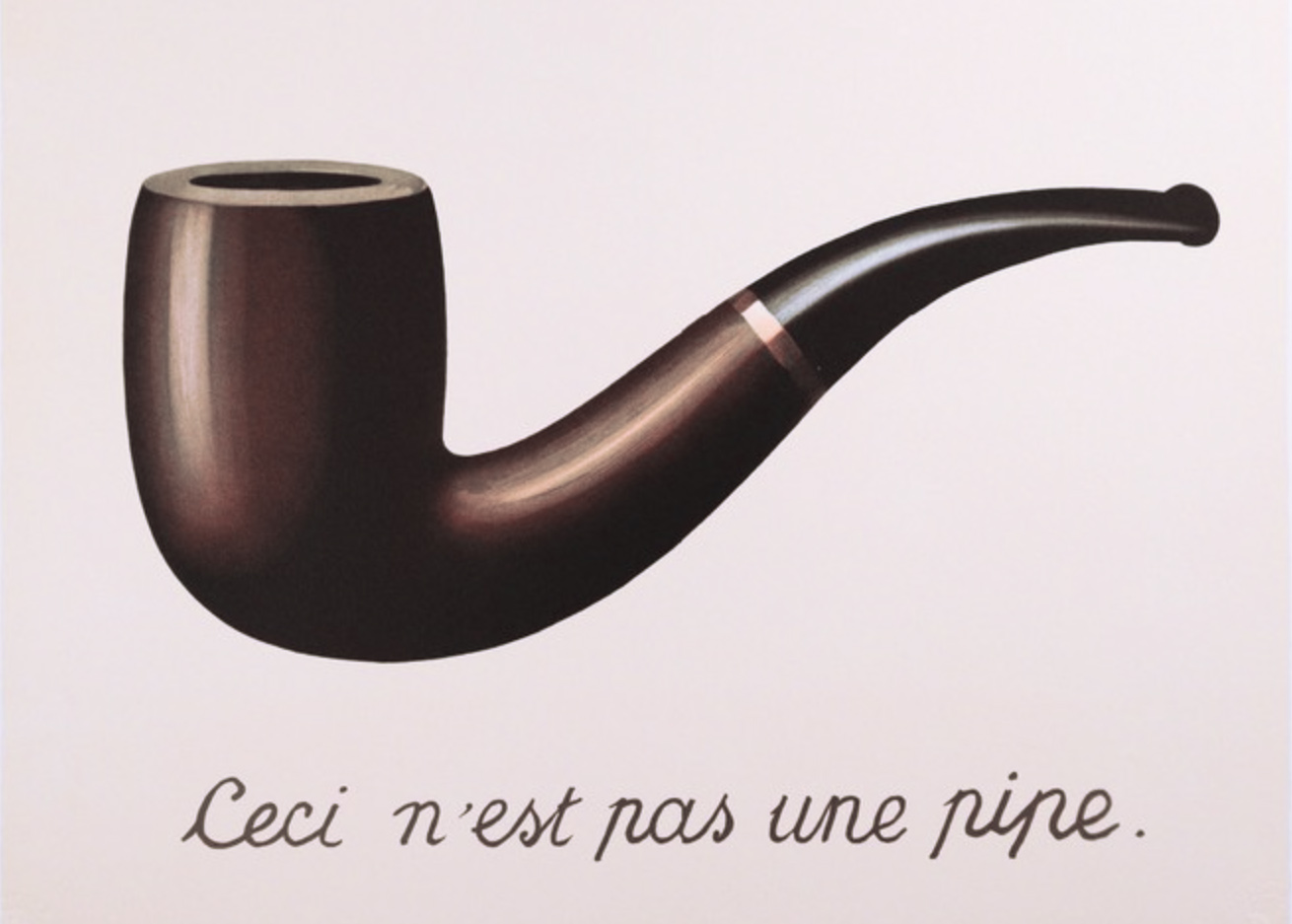
Given the level of complexity that present-day life has reached, abstracting – or rather, increasing the degree of abstraction from so-called reality – becomes essential in order to rediscover a certain essence of things.
In fact, what we commonly call reality is, in truth, only the visible and tangible part of a broader and truer reality. We do not perceive the reality of the microcosm, which is hidden from our sight and touch but is the true foundation of everything we can see and touch. “Art should make visible the invisible” said Paul Klee.
Freed from the obligation to render the visible world (that is what photography and video are for), painting developed a language throughout the 20th century capable of expressing both the visible and the invisible. How can this be achieved if not by abstracting from the appearances of the visible world alone to focus on what the visible and the invisible have in common?
Abstract painting does not dwell on the apparent shape of individual things, but instead focuses on what all things have in common. After all, what is nature if not a continuous and ceaseless interaction among the very basic elements? Minerals, plants, animals, and we humans are an infinite product of an endless combination of the same substances.
So how can all of this be represented in painting, if not by choosing neutral, abstract forms, the combination of which evokes, on a two-dimensional surface, the complex web of relationships among these basic elements? When faced with an abstract composition, one no longer needs to ask what it is but, rather, how it becomes; the “how,” and no longer the “what,” is the key to understanding an abstract painting.
To tell the truth, this should also happen when looking at a realistic painting. Often, however, viewers believe they have understood a painting simply because they have recognized things in it that they have seen before. Even in a realistic image, what matters most is the relationship between the parts—that is, the composition. The elements should be arranged in such a way as to create dynamic relationships that bring the image to life.
Michelangelo Merisi (Caravaggio) said: “I borrow bodies and objects; I paint them to remind myself of the magic of the balance that governs the entire universe. When there is no energy, there is no color, no form, no life.”
Caravaggio does not talk of the faces and actions of the human figures he paints.; he talks about energy, color and form. He mentions the “balance” which means the composition.
“Painting is a mental activity” (Leonardo da Vinci)
Every work of art is the creation of a finite field of relations that seek to evoke the far more complex and elusive relations perceived in the space of real life. Every description we formulate of the world is a process of transposing the infinite physical reality into finite mental constructs that we can use to observe, examine, and establish relations between different phenomena around and within us. Physical reality is to be understood as a dynamic interaction between the external and the inner world.
It must, however, be remembered that these constructs are abstractions of the real phenomena, which are of a far more complex and almost infinite nature than the ideas we make of them.
Every era and every civilization or culture has its own ideas about reality. While we do our utmost to give precise shape to our ideas, due to our own action reality slowly changes and we therefore should be able to change our ideas about it. While this is obvious in scientific activities, it is not at all so when dealing with social, moral or religious issues.
We have been aware ever since Immanuel Kant that we can know our representations of the phenomena but not of the phenomena in themselves. Nevertheless, we identify our mental symbols with the physical phenomena out of habit and we take our ideas as true reality for the sake of convenience.
Abstracting a common basic structure from the fleeting aspect of single things enables the Dutch painter to represent the broadest range of variation without getting lost in the outward appearances of countless things that fragment the consciousness and prevent an overall vision. As Mondrian put it, “Art should express the universal.”
Harassed as we are by the frenzied pace of life, we have lost the capacity to consider questions of greater breadth. We have reached the point of being ashamed to talk about universal issues. In today’s hectic and disruptive reality, art should help give new form to the most substantial aspects of existence, evoking a vision of the world that lasts longer than a couple of seasons.
These pages are also dedicated to those who truly believe that abstract art can be reduced to a superficial exploration of cold geometry for its own sake. This has, unfortunately, been the case with many, all head and no heart, the type Fausto Melotti referred to as “hardworking clerks of abstraction”.
A realistic or, if you prefer, a figurative artist, Giuseppe Pellizza da Volpedo, author of “Il Quarto Stato” said:
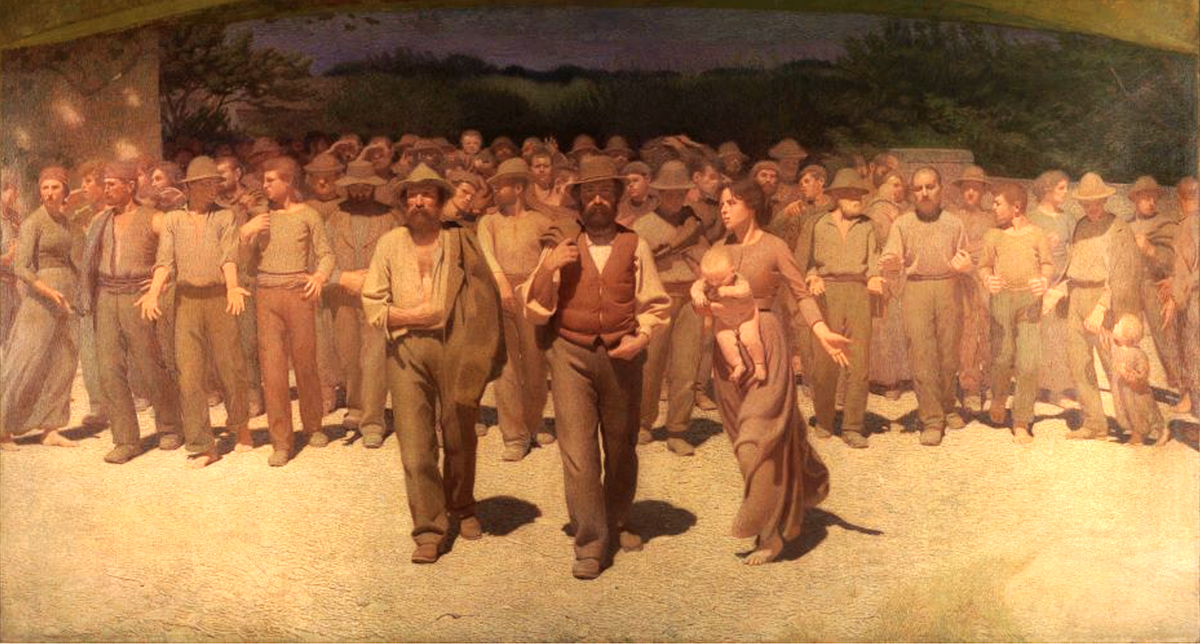
“It is not real truth that I must represent in the painting but ideal truth. The conflict of these two forms of truth in the mind of the artist who produces the work ensures that it will remain incomplete. Artists who stick too close to reality in their pursuit of truth fail to achieve their objective. It is through the sacrifice of real truth that ideal truth is attained.” .
Copyright Michele (Michael) Sciam. All Rights Reserved More